


Warfarin is a very important solution, and it is commonly known as "blood thinner." But it does not actually make your blood thinner. Instead, it helps prevent harmful blood clots from forming or getting bigger.
Antidote for Warfarin works by blocking the action of Vitamin K in the body. Such vitamins are needed for making blood-clotting factors in the liver. Eventually, by slowing down such a clotting process, Warfarin can help in preventing severe issues including strokes or heart attacks.
Why Would You Need an Antidote?
Taking Warfarin shall need careful balance as when you take too little, you are at risk of forming dangerous blood clots. When it is consumed in excess, or if the body reacts unexpectedly, the risk of severe bleeding shall be enhanced.
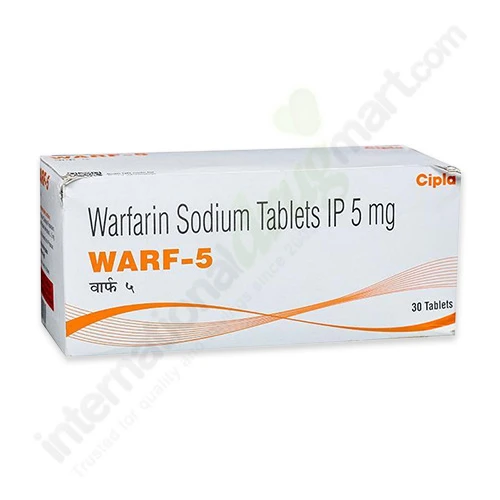
Bleeding is the main worry when the use of medicine prevents clots. Even when a small injury can be a severe issue if that blood cannot clot well enough. This is where the antidote for warfarin comes in. It is a way to quickly reverse those effects that have come out of Warfarin.
If you have major bleeding, just like a bad fall or internal bleeding, you shall also need a fast fix. Doctors might further use an antidote to get the blood clotting ability back to normal quickly. This emergency action can further save lives and prevent various complications.
The Primary Antidote: Vitamin K
The main and most common antidote for Warfarin is trusted to be Vitamin K. Also remember as to how Warfarin should work by blocking Vitamin K? Giving some of the extra Vitamin K shall undergo that block and further allow the body to start making clotting factors again.
This Vitamin K is usually about giving as a man-made prescription medicine known as phytonadione. This should help the liver to get back to work to make the blood-clotting proteins that are needed. This is usually the first and most direct step while reversing much of Warfarin.
How and When is Vitamin K Given?
The way Vitamin K medication is given shall all depend on how urgent the situation is. When the blood test might show Warfarin level is a little too high, but one might have no bleeding, an oral dosage shall be enough. An oral dose also means that you simply can take a pill orally, which is a safer route.
For emergency situations, just like when a patient is bleeding badly, it is given through a vein, called IV infusion. An IV is much faster; it works hours to reverse the drug's effect on the blood. However, it is important that this IV infusion is given slowly to avoid a rare but serious reaction.
The amount, or dosage, of Vitamin K is decided by the doctor. This is usually based on blood test results called the INR (International Normalized Ratio). The INR allows the doctor to know exactly how long it takes blood to clot, guiding the correct treatment.
Faster Solutions for Emergencies
Sometimes, bleeding is just so life-threatening, and you simply cannot wait for Vitamin K to work for it. This can take approx. 12 to 24 hours for Vitamin K to fully correct the clotting issue. In such high-danger situations, doctors should have even faster options.
Such options include special products having the missing clotting factors themselves. One of the most common is known as Prothrombin Complex Concentrate (PCC), which is the brand Kcentra. PCC is a solution that is made from human blood which has a high amount of clotting factors Warfarin blocks.

PCC should act quicker; often it is correcting the issue within minutes, and not hours. It is only used for major or life-threatening bleeding as it is super powerful. Doctors should give PCC right along with Vitamin K to get both an instant and long-lasting outcome.
Another option for emergency situations is Fresh Frozen Plasma (FFP). FFP is just another blood product which has all clotting factors and proteins. This will take a little longer to prepare and infuse than PCC, and a larger volume is needed here.
Both PCC and FFP are well used only in some severe situations, like massive head injury or some major internal bleeding. Quick action helps in stabilizing the patient and restricting the most urgent bleeding. Such a choice between these is based on the patient's condition and what the hospital has ready.
Safety and Monitoring: The INR
The International Normalized Ratio, or INR, is trusted as the most important tool for everyone on Warfarin. It is a simple blood test which helps in measuring as to how much blood-clotting time is slowed down. The doctor has a specific target range for your INR to keep the blood safe from clots but not at risk of bleeding.
If your INR is high, this means your blood is severely slow to clot, and you are at risk of bleeding. If it is low, the risk of a blood clot is what Warfarin is supposed to prevent.
Key Takeaways and Final Thoughts
Warfarin is a life-saving medicine. It helps to prevent dangerous blood clots. The main antidote for Warfarin is Vitamin K (phytonadione), which reverses its blocking effect. For immediate, life-threatening breeds, stronger options including PCC or FFP are recommended.
Note to keep a close eye on your INR in the target range by taking medicine as prescribed. Monitor for signs of bleeding and sustain a consistent diet, especially with Vitamin K foods. The safety of your health depends on working closely with the doctor and getting regular blood tests.