


Penicillin is an antibiotic med, sourced from molds and taken through purification processes. There are many natural sources of penicillin. The initial form is known to be effective in treating streptococcus and staphylococcus infections. This drug is popular even today, and used for treating different forms of bacterial infections. But is azithromycin a penicillin? It is worth your while to have more inputs.
Penicillin is one of the first cohort of antibacterial meds. Fleming, Alexander witnessed strains of staphylococcus stop growing on molds of penicillin. The scientist discovered it to have properties to kill strands of bacteria that are harmful to humans. Natural form of penicillin - labelled as Penicillin V and Penicillin G - are in active use.
This drug is unstable in acids; it gets broken down in the acidic ambience of the tummy. This is one of the reasons it is administered as an injection. However, penicillin V is more stable and hence can be taken through the oral route. Penicillin-based antibiotics work by blocking chemicals needed for bacterial reproduction and growth.
As an outcome, penicillin as well as its derivatives largely work on bacteria that produce cellular membrane, and those multiplying at a faster rate. However, these meds do not cause harmful effects on cells of humans. This is mainly because humans’ cells do not have cellular walls, similar to bacteria.
In this light, what is azithromycin?
Azithromycin is an antibiotic drug administered for conditions such as pneumonia, inner-ear conditions, infections in gastric tract. This med is available as an intravenous offering, as an eyedrop and also as tablets.
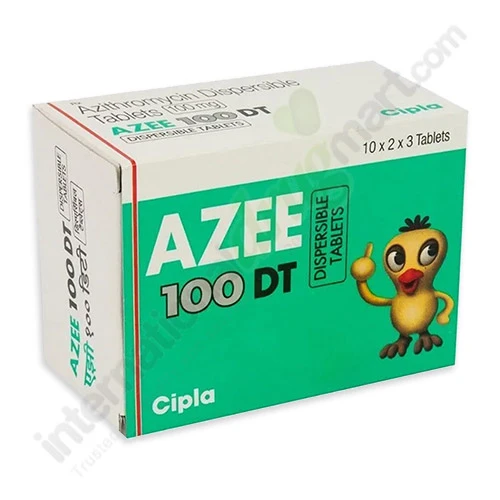
This drug was put to medical use in late-1980s; currently it is sold as a generic drug. As per recent estimates, it ranks among top-100 meds widely-taken in US. Number of prescriptions each year is ~10 million. Caregivers use azithromycin for a wide range of conditions such as tonsilitis and / or pharyngitis, sinusitis, otitis media and chronic obstructive pulmonary diseases like pneumonia.
Azithromycin can be used for fighting bacterial infections in pregnant woman as well. But it is not clear if it is safe on women whose is nursing an infant, or breastfeeding a baby. It is also prescribed for treating episodes of asthma. This med is known to have anti-inflammatory, antiviral and antibacterial capabilities.
Azithromycin blocks bacterial growth by disrupting how microbes process proteins. It also a relatively high-level of stability to sustain in acidic environment. This is a reason why its tablet-form is widely prescribed. Another advantage is: it can be absorbed without difficulties in lesser time i.e., 2.5 - 3 hours by when this med reaches its maximum concentration in adult and in children.
Is azithromycin a penicillin?
Azithromycin forms a part of a genre called macrolide antibiotics. It is hence not a penicillin. It is available in a longer-acting / extended-release version. It can be taken either without or with a meal. But, for the extended-release liquid-version, you are advised to take it at least 60-minutes prior to a meal.
Azithromycin is also taken for treating gastric infections such as travellers’ diarrhea and conditions triggered by H. pylori. Some caregivers use it to treat a pertussis and Legionnaires’ syndrome. This drug is known to have a few other uses; in order to know more about the range of conditions it treats, you are advised to speak with your treating physician.
Azithromycin may cause a few discomforts such as pain in your tummy, spells of diarrhea, severe headache and vomiting with nausea. In some rare instances, a few severe conditions such as an erratic pulse rate, yellowing of eyes, formation of hives or blisters on skin, internal bruising / bleeding or systems of flu are observed.

If any of these undesired outcomes persist for long, reach out to Food and Drug Administration (FDA) in the US; in Canada, you can call Health Canada or a local poison management cell.
Does Azithromycin Contain Penicillin?
Common queries include the phrase, "Does azithromycin have penicillin in it?" The answer, though, is no. Azithromycin does not contain penicillin or anything whatsoever that is penicillin-based. They are two completely different classes of antibiotics. The penicillin drugs belong to the beta-lactam group, whereas azithromycin is under the macrolide group. In the human body, these two types work differently, target bacterial processes somewhat differently, and each possesses its own chemical structure.
The Source of Confusion
Often, these confusions arise because both penicillin and azithromycin are antibiotics used to treat bacterial infections. Sometimes they are prescribed for similar conditions, such as throat infections, sinus infections, or pneumonia. Hence it is easy for someone who once took penicillin to think the two might be related if they are now asked to take azithromycin. It is, however, exactly because the origins and actions of these two are not the same that a doctor might opt to administer one over the other, depending on the kind of bacteria causing the condition.
Azithromycin for People Allergic to Penicillin
If one truly suffers from an allergy to penicillin, this really just depends on whether azithromycin actually contains penicillin. A real allergy to penicillin could cause serious events such as swelling, rashes, difficulty in breathing, and rarely, life-threatening-anaphylactic reactions. It is mostly considered a safe drug to administer to such allergic persons since it does not contain penicillin per se. Very important to remember is that whenever you say you are allergic to any class of medicine, you should keep your doctor updated before taking any medication.
Azithromycin vs Penicillin: Mechanisms of Action
Penicillin kills bacteria by preventing them from constructing their cell wall properly, causing eventual rupture due to osmotic imbalance. In contrast, azithromycin inhibits the synthesis of proteins necessary for bacterial growth and survival. Because of its mode of action, azithromycin is one of the main reasons it does not contain penicillin. It also is the reason why azithromycin may be considered useful for bacterial strains that are resistant to penicillin.
Situations favoring the use of azithromycin
Azithromycin may be prescribed by doctors to individuals who are allergic to penicillin.
With bacterial infections that are antibiotic-resistant to penicillin, Must take a medicine once a day for it to be convenient.
Need a drug that is effective in an acidic medium such as the stomach.
Penicillin may not be the best drug in some cases of respiratory infections, certain sexually transmitted infections, and skin infections and it is also contraindicated in pregnancy; and therefore, azithromycin may be preferred.
Safety Considerations
The answer to “does azithromycin have penicillin in it” is no, but this does not necessarily mean that azithromycin is without side effects. Side effects, as for all antibiotics, are stomach upset diarrhea headache and dizziness. Occasionally, it can lead to an aberration in the the heart rhythm or produce an allergic reaction that is not penicillin. Please contact your health provider if you experience any unique symptoms.
So Why Does It Matter to Learn the Difference
People make more informed and safer decision once they know that azithromycin does not contain penicillin. A lot of people just refuse to take the antibiotics they have been prescribed because, once upon a time, they had an allergic reaction to penicillin. Because they know that azithromycin is a different chemical, and the decision can be made based of the specific treatments plans without worrying about an unnecessary adverse reaction to group.
Final Takeaway
So, does azithromycin have penicillin in it? Absolutely not. They are two different antibiotics that treat infections in different ways. If you have an allergy to penicillin, azithromycin should be the route taken; however, it is always best to check with your doctor. Correct use of antibiotics is necessary for a proper match between the drug, the infection, and your particular past history.
Disclaimer
Information provided here are only of supplementary nature. Information shared here does not substitute a qualified doctor’s advice. This website is not suggesting intake of this drug as safe or appropriate. Hence it is advised to talk to your doctor before consuming this med or any other drug.